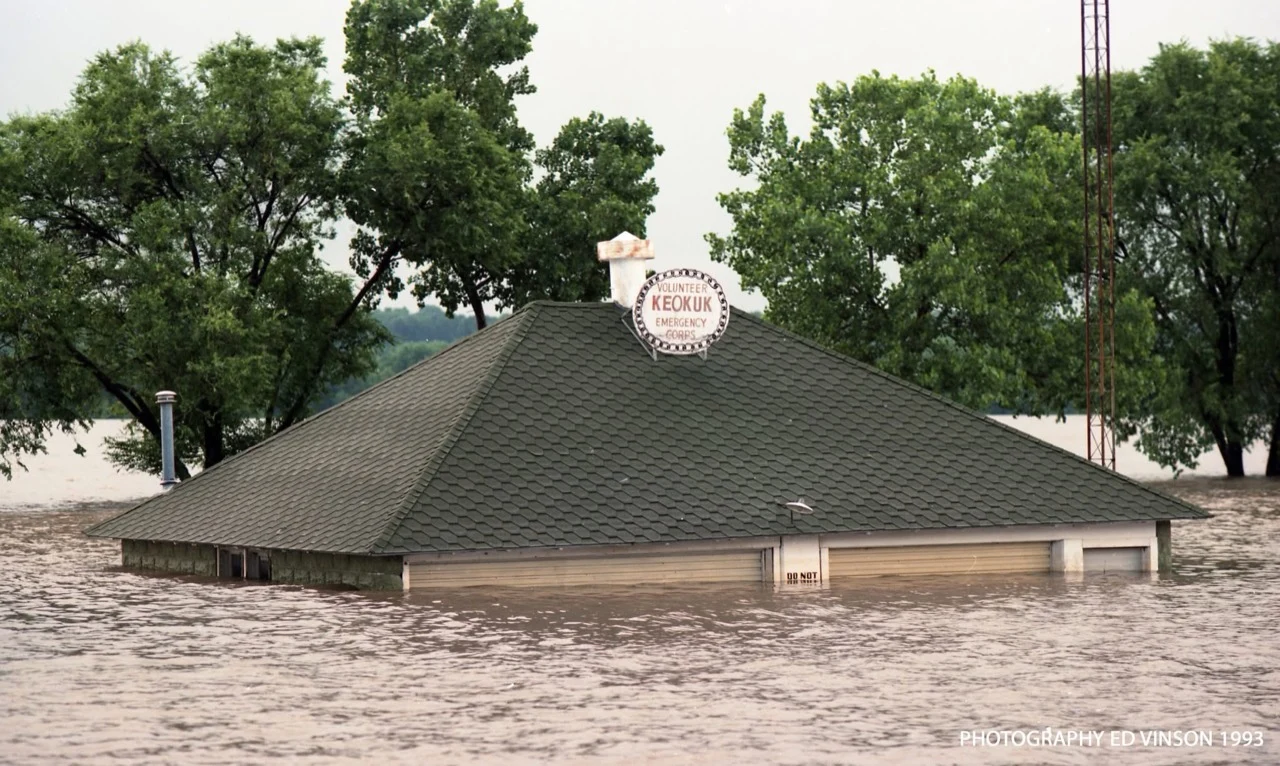
KVEC · 1993 flood · Photograph: Ed Vinson
Information & resources
Keokuk, Iowa · Volunteer search & rescue
SAFETY QUIZZES
Test your knowledge of outdoor preparedness, requesting help and safe decisions around a search or rescue.
Choose one answer for each question. We’ll explain the correct answer before you move on. At the end, review your results or take the quiz again.
Your answers stay on this page and are not submitted. Reloading starts a new attempt.
Enable JavaScript for the interactive quiz, or use the questions and answer explanations below.
Correct answer: Locate people in distress and help bring them to safety
Search and rescue connects people in distress with coordinated assistance. The resources needed depend on the incident and location.
Correct answer: Stay put and follow the dispatcher’s instructions
Remaining in a known location helps responders find you. Move only when necessary for immediate safety or as directed.
Correct answer: Carry insulating layers and protection from wind and moisture
Weather and delays can change an outing quickly. Dry clothing and suitable layers help prevent heat loss.
Correct answer: A whistle
A whistle is a useful signaling tool. Keep it accessible rather than buried in your pack.
Correct answer: Scene hazards and the limits of your skills and equipment
Moving water, unstable footing and changing weather can endanger helpers. Report the emergency and avoid creating another casualty.
Correct answer: The responsible incident or search authorities
Coordinated assignments support accountability and effective coverage. Follow the responsible agency’s directions for participation.
Correct answer: Last known location, plans, description and relevant medical concerns
Give responders specific, accurate information and distinguish facts from guesses. Report new information promptly.
Correct answer: Rescue time varies, so request help promptly and prepare for a wait
Weather, terrain and available resources affect response. There is no universal one-hour rescue guarantee.
Correct answer: Navigation, light, first aid, water and emergency shelter
The Ten Essentials cover several needs if a trip takes longer than expected. Choose equipment suitable for your route and conditions.
Correct answer: Stay with the child in a safe place and contact police or designated event staff
Use the event’s lost-child procedure or contact authorities. Keep the child supervised while responders arrange reunification.
Correct answer: To reduce exposure if an unexpected delay occurs
Emergency shelter is one part of preparation. Its protection depends on conditions, placement and the rest of your equipment.
Correct answer: Carry sufficient water and an appropriate treatment method for additional water
Natural water sources can contain harmful organisms. Plan water needs and treatment before leaving.
Correct answer: Shivering, confusion and reduced coordination
Hypothermia can impair judgment and movement. Severe hypothermia may progress beyond shivering; obtain emergency help and prevent further cooling.
Correct answer: Use a whistle or tap on a wall or pipe
Protect your airway from dust and signal responders when possible. Do not use flames where damaged utilities may create additional hazards.
Correct answer: Transmit a distress alert to the search-and-rescue system
A PLB is emergency signaling equipment, not ordinary navigation gear. Learn its operation and register it as required before your trip.
Correct answer: Turn back, wait for safer conditions or choose another route
Do not force a hazardous crossing. A delayed or changed trip is safer than entering water beyond your abilities.
Correct answer: Use visible clothing, a light or a whistle instead of a signal fire
Choose signals that do not start another emergency. Keep yourself visible from a safe location.
Correct answer: Stop and choose a safer alternative or request assistance
Match terrain to your experience and equipment. Avoid committing to a route you cannot safely negotiate or reverse.
Correct answer: Call 911, limit movement and follow dispatcher instructions
Leave them in place unless immediate danger or lifesaving care requires movement. Technical evacuation belongs to appropriately trained responders.
Correct answer: Contact the responsible agency and follow its volunteer instructions
Search resources are requested and directed through responsible agencies. Self-deployment can interfere with coordinated operations.
Educational practice. This quiz is not a certification or a substitute for hands-on training. For emergency assistance, call 911.
Answers reviewed November 2026 against the following public guidance.