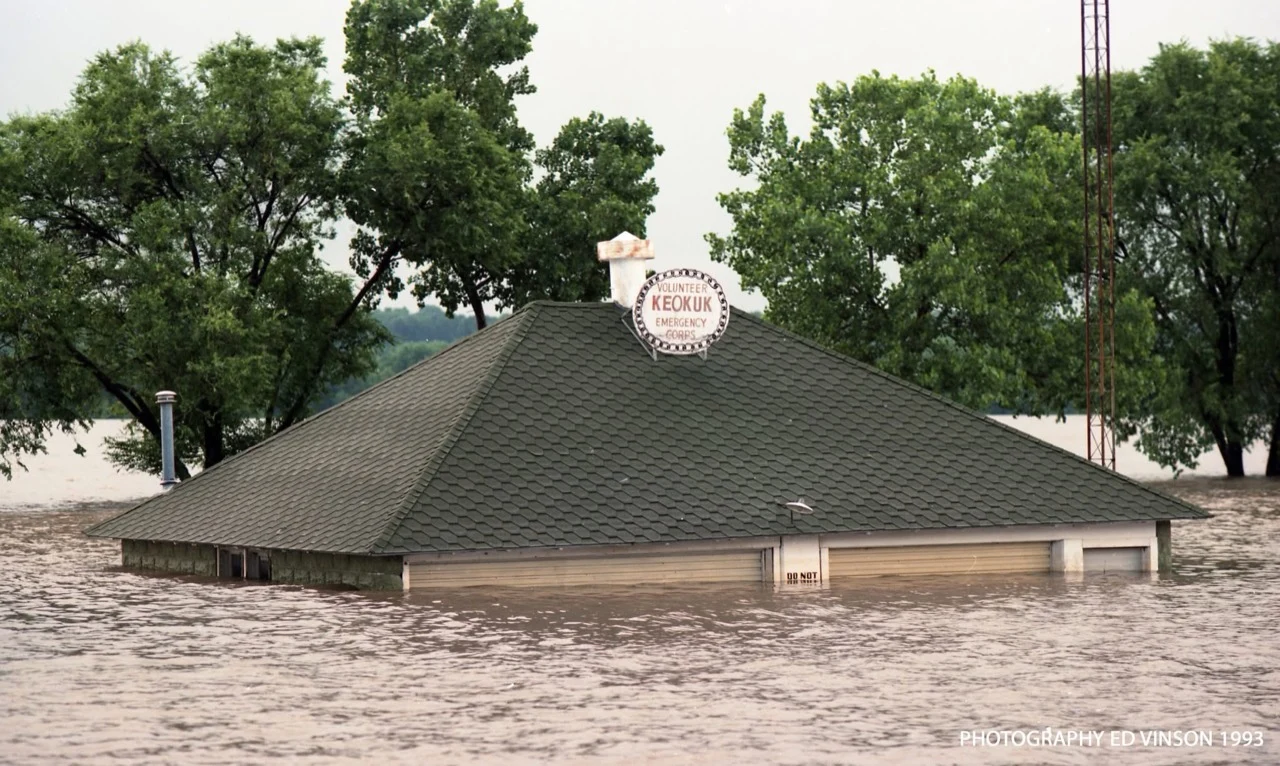
KVEC · 1993 flood · Photograph: Ed Vinson
Information & resources
Keokuk, Iowa · Volunteer search & rescue
SAFETY QUIZZES
Practice everyday decisions about emergency plans, supplies and staying safe during common hazards.
Choose one answer for each question. We’ll explain the correct answer before you move on. At the end, review your results or take the quiz again.
Your answers stay on this page and are not submitted. Reloading starts a new attempt.
Enable JavaScript for the interactive quiz, or use the questions and answer explanations below.
Correct answer: Identify local hazards, household needs and ways to communicate.
A useful plan reflects local risks and the people who will use it, including assistance and communication needs.
Correct answer: One gallon per person per day for at least three days.
Water is also needed for food and hygiene. Try to store two weeks if possible, with extra for individual needs.
Correct answer: A battery flashlight.
Portable electric light avoids an open flame. Include spare batteries or suitable charging.
Correct answer: Send a brief text and use the household communication plan.
Brief texts may get through when calls cannot. They still require service; agree on contacts and meeting arrangements in advance.
Correct answer: Get out, stay out and call 911.
Use a safe route to your meeting place. Tell responders if someone is missing.
Correct answer: Drop, cover and hold on.
Get low and protect your head and neck, using sturdy cover if available. Stay inside until shaking stops.
Correct answer: Adapt it for household needs and potentially longer disruptions.
A supply target is a planning tool, not a promise that help or utilities will arrive on a fixed schedule.
Correct answer: Turn around and use a safe alternative route.
Water can hide damaged pavement and dangerous currents. Never walk or drive through floodwater or around road barriers.
Correct answer: A basement or small interior room on the lowest level of a sturdy building.
Move away from windows and protect your head and neck. A mobile home is not a safe tornado shelter.
Correct answer: Leave as directed using official evacuation instructions.
Follow evacuation orders promptly. Waiting for visible danger can leave routes blocked or unsafe.
Correct answer: Check dates, replace used items and update needs.
Review supplies regularly, including medication arrangements, batteries and changing household needs.
Correct answer: Leave without operating switches or electronics, then call for help from a safe location.
Avoid sparks and flames. From safely away, contact 911 or the gas utility; do not try to locate or repair the leak.
Correct answer: Outdoors, more than 20 feet from doors, windows and vents.
Generator exhaust can cause fatal carbon monoxide poisoning. Use battery-powered or battery-backup CO alarms, too.
Correct answer: Stay with the vehicle, call for help and make yourself visible.
A vehicle provides shelter and is easier for rescuers to find. Prevent exhaust blockage and carbon monoxide exposure.
Correct answer: A substantial enclosed building or fully enclosed hardtop vehicle.
No outdoor location is safe during a thunderstorm. Seek proper shelter immediately rather than relying on a posture or tree.
Correct answer: ATMs and electronic payments may fail.
A modest reserve offers another payment option. It cannot guarantee that services are available.
Correct answer: Food, water, medicines, identification records and an appropriate carrier or leash.
Plan for pets before an emergency. Include care instructions, identification and supplies suited to each animal.
Correct answer: Call 911 and apply firm direct pressure, using a protective barrier if available.
Heavy bleeding needs immediate action. Follow dispatcher instructions and use bleeding-control techniques you have been trained to perform.
Correct answer: Protect portable copies from water and maintain secure backups.
Accessible records help with identification and recovery. Keep sensitive information secure.
Correct answer: Keep things that can burn at least three feet from heating equipment.
Give heaters clear space and follow manufacturer instructions. Smoke alarms provide warning; they do not prevent ignition.
Educational practice. This quiz is not a certification or a substitute for hands-on training. For emergency assistance, call 911.
Answers reviewed November 2026 against the following public guidance.