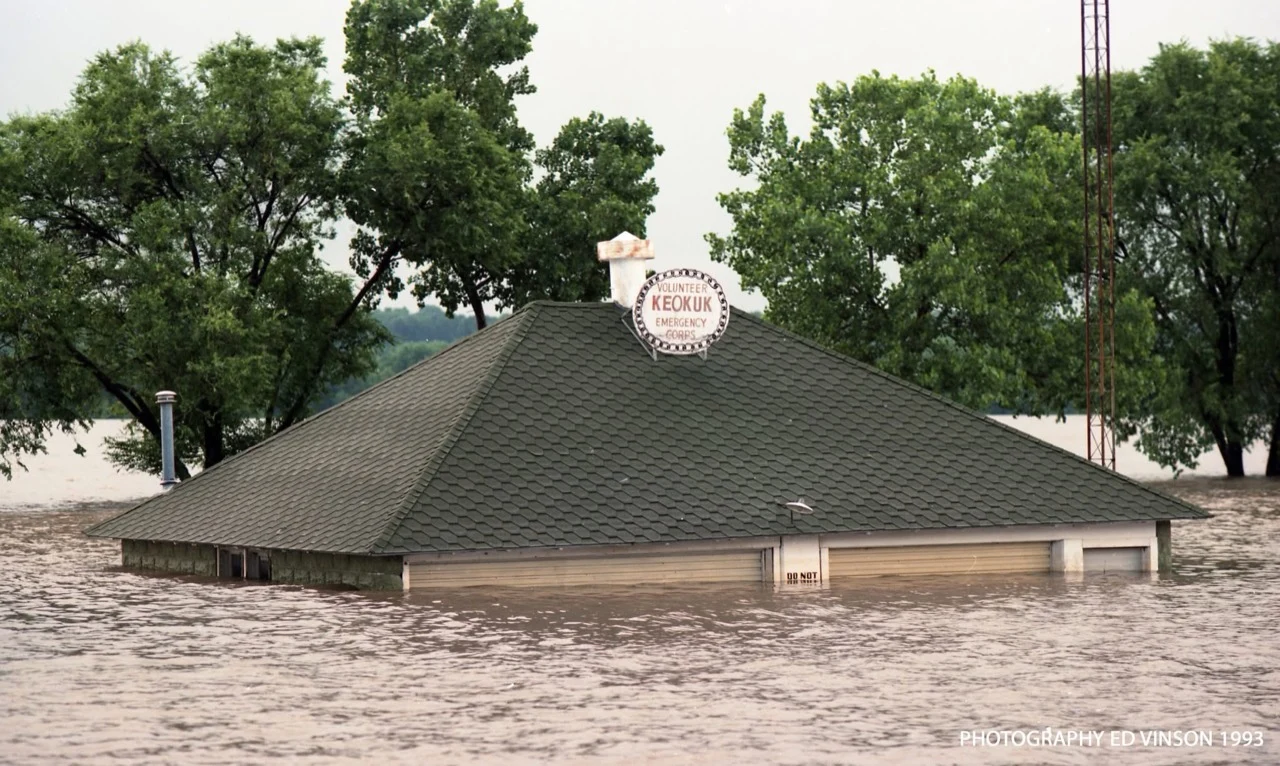
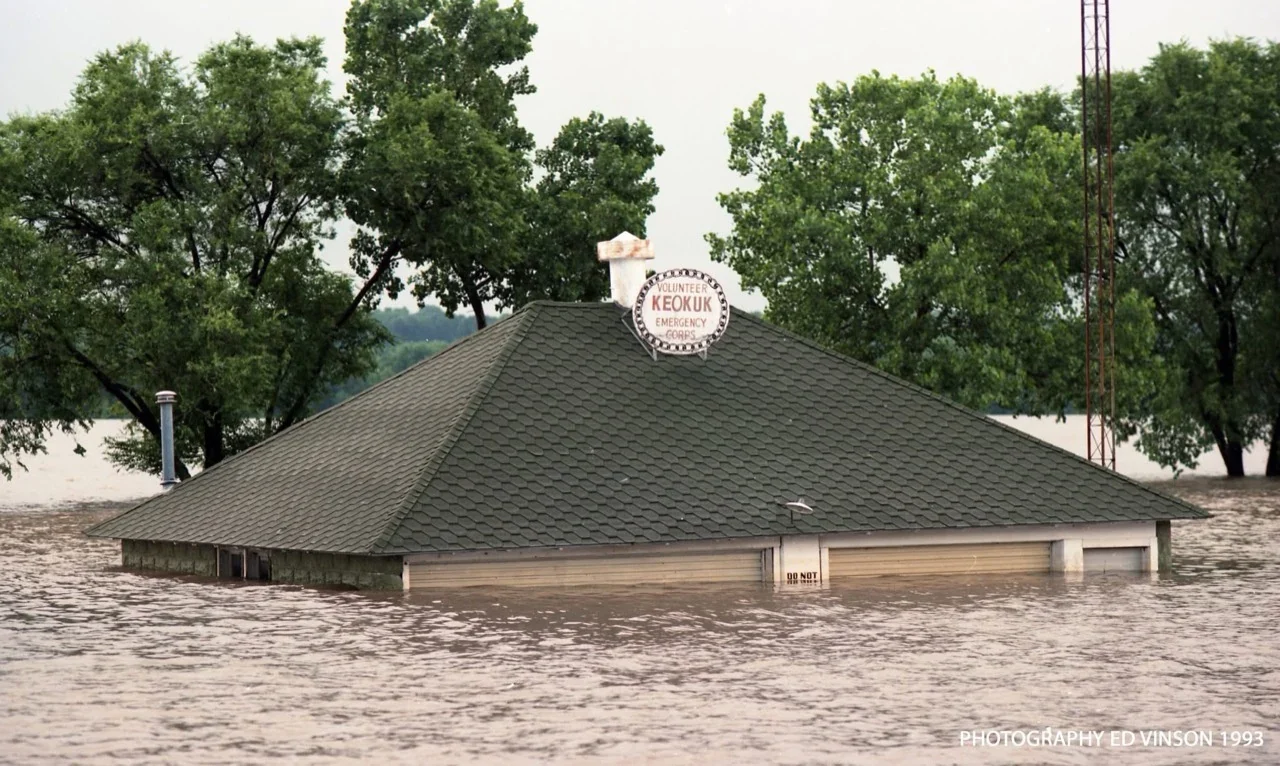
KVEC · 1993 flood · Photograph: Ed Vinson
Information & resources
Keokuk, Iowa · Volunteer search & rescue
SAFETY QUIZZES
Recognize flood warnings, avoid dangerous water and make safer decisions before returning to a flooded property.
Choose one answer for each question. We’ll explain the correct answer before you move on. At the end, review your results or take the quiz again.
Your answers stay on this page and are not submitted. Reloading starts a new attempt.
Enable JavaScript for the interactive quiz, or use the questions and answer explanations below.
Correct answer: Conditions are favorable for flooding; stay alert and prepare
A watch calls for readiness and close attention to updated information.
Correct answer: Flooding is occurring or imminent
Act on the warning and follow local protective instructions.
Correct answer: Move to higher ground immediately by a safe route
Flash flooding calls for immediate action. Do not enter floodwater to escape.
Correct answer: Turn around and use a safe alternative
Water can hide deep sections, debris or a washed-out road. Do not drive into it.
Correct answer: Respect the closure and find another route
Never drive around flood barricades. Conditions may be dangerous beyond what you can see.
Correct answer: Current, hidden hazards and contamination can endanger anyone
Do not use swimming ability or apparent depth as permission to enter floodwater.
Correct answer: Reach higher ground without crossing floodwater
Leave low-lying areas promptly when flooding threatens.
Correct answer: Stay out and seek qualified assistance
Floodwater may carry electrical current. Do not enter a room with submerged outlets or cords.
Correct answer: Sewage, chemicals, sharp objects and electrical hazards
Floodwater can conceal several hazards at once. Avoid contact.
Correct answer: In a safe area away from floodwater
Keep children out of contaminated water and away from unstable debris.
Correct answer: Wash with soap and clean water as soon as possible
Clean exposed skin and give cuts appropriate care. Seek medical advice for wounds or illness.
Correct answer: Current local road and emergency updates
Receding water does not establish that roads are safe. Follow current closures and instructions.
Correct answer: Extra traffic and people can obstruct emergency operations
Keep access open for rescue, utility and recovery work.
Correct answer: An electrician's assessment of the electrical system
Do not restore power until the affected system has been checked for safety.
Correct answer: A battery-powered flashlight
Avoid flames because gas leaks may be present. Leave immediately if you suspect a leak.
Correct answer: Use a safe alternative until the well is assessed and water is tested
Flooding can contaminate well water. Follow local health guidance for disinfection and testing.
Correct answer: Follow official disposal guidance; do not assume it is safe to eat
Floodwater can contaminate food and packaging. Some containers cannot be safely cleaned.
Correct answer: Before flooding threatens, as part of the plan
Plan for mobility, medical and transport needs in advance with appropriate local contacts.
Correct answer: A safe destination and transport arrangements that accommodate the animals
Include pets in your plan and check local shelter arrangements beforehand.
Correct answer: Keep protected copies in waterproof storage that can be taken with you
Protect essential documents before water threatens the property.
Educational practice. This quiz is not a certification or a substitute for hands-on training. For emergency assistance, call 911.
Answers reviewed November 2026 against the following public guidance.