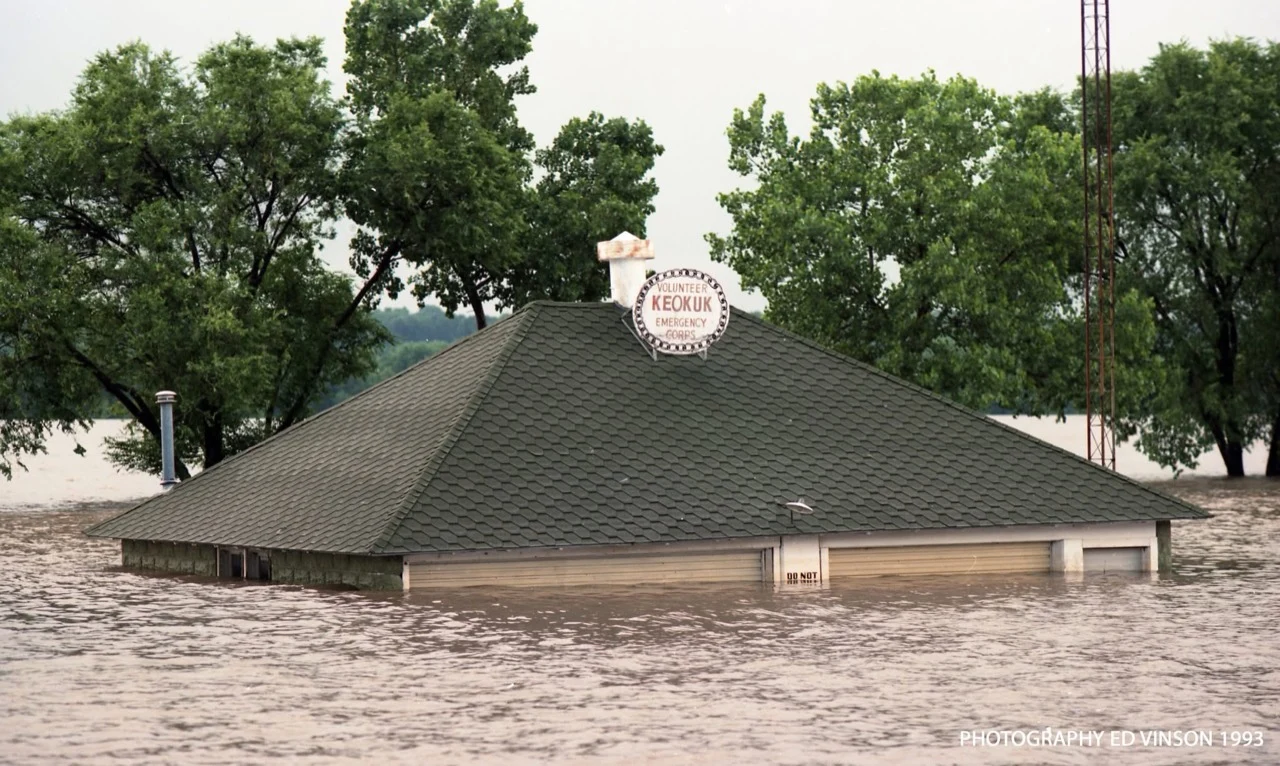
KVEC · 1993 flood · Photograph: Ed Vinson
Information & resources
Keokuk, Iowa · Volunteer search & rescue
SAFETY QUIZZES
Review everyday first-aid decisions, emergency warning signs and adult CPR knowledge. Educational practice; not a substitute for hands-on training.
Choose one answer for each question. We’ll explain the correct answer before you move on. At the end, review your results or take the quiz again.
Your answers stay on this page and are not submitted. Reloading starts a new attempt.
Enable JavaScript for the interactive quiz, or use the questions and answer explanations below.
Correct answer: Whether the scene is safe
Check for hazards before approaching. An unsafe scene can create additional casualties.
Correct answer: A recovery position on their side
A recovery position helps protect the airway. Continue monitoring breathing; gasping is not normal breathing and requires a different emergency response.
Correct answer: At least 2 inches, avoiding depths greater than 2.4 inches
Adult CPR requires effective depth while avoiding excessive compression. These measurements do not apply to infants or young children.
Correct answer: 30 compressions to 2 breaths
Use 30:2 when providing conventional adult CPR. Activate emergency response, obtain an AED and follow dispatcher instructions and your training.
Correct answer: Apply firm, direct pressure to the wound
Direct pressure helps control external bleeding. Use protective equipment when available and give additional care according to your training.
Correct answer: Cool it with clean, cool running water
Cool the burn without using ice or greasy remedies. Serious, large or sensitive-area burns need medical assessment.
Correct answer: They cannot speak, breathe or cough effectively
Severe airway obstruction requires immediate help. A strong, effective cough is different from an ineffective cough or inability to breathe.
Correct answer: 5 back blows followed by 5 abdominal thrusts
Repeat the sequence as trained until the obstruction clears or the person becomes unresponsive. Pregnancy or inability to reach around the abdomen requires modified care.
Correct answer: Ask them to remain still and call 911
Leave them in the position found unless movement is necessary for safety or lifesaving care. Follow dispatcher instructions and your training.
Correct answer: Sit leaning slightly forward while pinching the soft part of the nose
Maintain pressure for 10–15 minutes. Continued bleeding or signs of a more serious problem require medical attention.
Correct answer: Putting an object into the person’s mouth
Do not restrain the person or put anything in their mouth. Call 911 for a first seizure, one lasting more than five minutes, or other emergency warning signs.
Correct answer: Get help, shelter the person and replace wet clothing with dry insulation when feasible
Hypothermia is a medical emergency. Handle the person gently and prevent further heat loss while waiting for help.
Correct answer: Call 911 immediately and note when symptoms began
These can be stroke warning signs. Emergency evaluation is needed even if the symptoms improve.
Correct answer: Call 911 and follow the dispatcher’s instructions
A possible heart attack needs emergency medical care. Do not delay the call to see whether the symptoms resolve.
Correct answer: Limit use and apply a cold pack wrapped in a thin, dry towel
Treat the injury as a possible fracture rather than assuming it is only a sprain. Do not force movement; seek care for concerning or persistent symptoms.
Correct answer: Remove it promptly using a clean fingernail or tweezers
Remove a visible stinger quickly and clean the area. Breathing difficulty or other signs of anaphylaxis require immediate emergency help.
Correct answer: By the crown, avoiding the root
Handle the tooth gently and keep it from drying out. Seek dental or emergency care promptly; do not scrub the root.
Correct answer: Pale, cool, clammy skin with a rapid, weak pulse and altered responsiveness
Shock can accompany life-threatening injury or illness. Call 911, address the emergency as trained and monitor breathing and responsiveness.
Correct answer: Grasp close to the skin with fine-tipped tweezers and pull steadily upward
Avoid burning, squeezing or twisting the tick. Clean the area after removal and seek advice if symptoms or concerns develop.
Correct answer: Seek immediate medical care without trying to remove it
An embedded object is different from loose surface debris. Avoid disturbing the injury and obtain emergency medical help.
Educational practice. This quiz is not a certification or a substitute for hands-on training. For emergency assistance, call 911.
Answers reviewed November 2026 against the following public guidance.