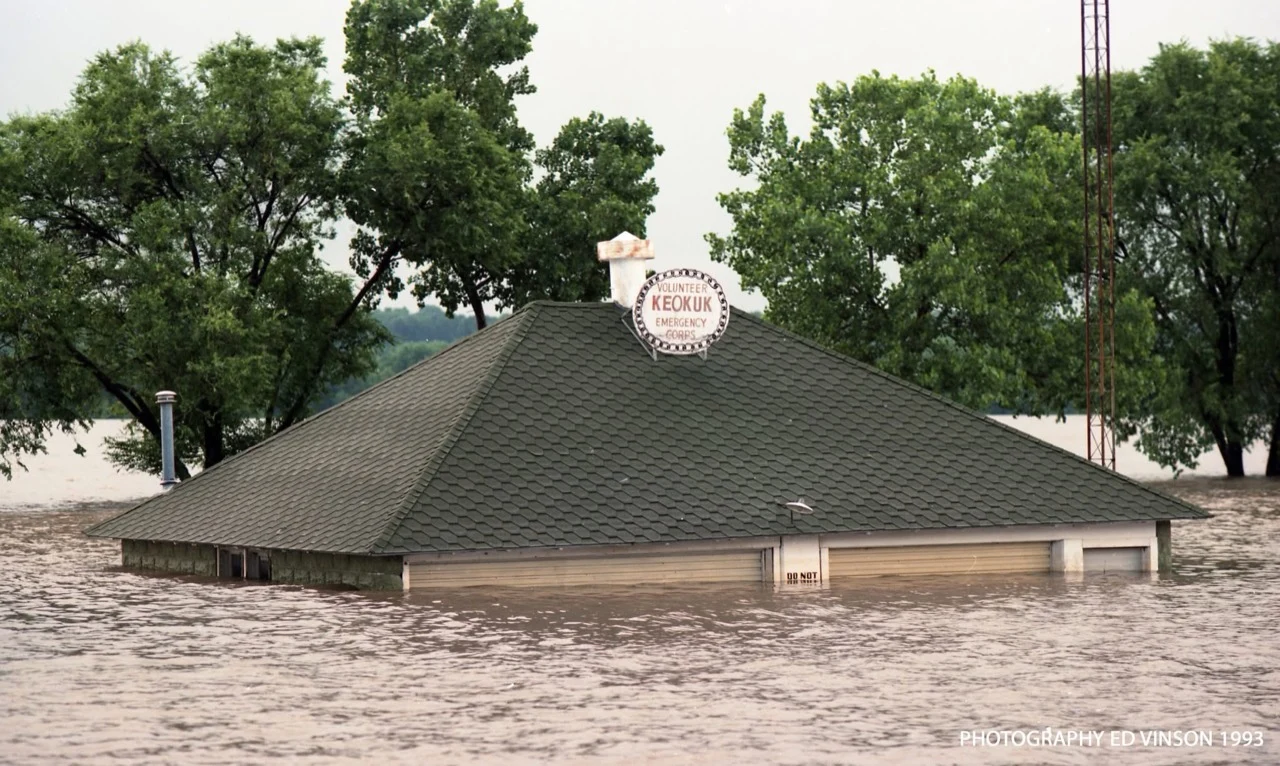
KVEC · 1993 flood · Photograph: Ed Vinson
Information & resources
Keokuk, Iowa · Volunteer search & rescue
SAFETY QUIZZES
Practice the decisions that matter when severe weather, outages and other emergencies threaten your household.
Choose one answer for each question. We’ll explain the correct answer before you move on. At the end, review your results or take the quiz again.
Your answers stay on this page and are not submitted. Reloading starts a new attempt.
Enable JavaScript for the interactive quiz, or use the questions and answer explanations below.
Correct answer: Take shelter immediately
A warning requires immediate protective action. Use your designated tornado shelter.
Correct answer: Identify a nearby sturdy shelter before storms arrive
Mobile homes are unsafe tornado shelters. Arrange access to a sturdy building or designated shelter in advance.
Correct answer: Drop, cover and hold on
Protect yourself from falling objects and stay inside while shaking continues.
Correct answer: Pull over safely away from overhead hazards and stay in the vehicle
Avoid bridges, overpasses, trees and utility lines when choosing a safe stopping place.
Correct answer: Inside a substantial building or enclosed metal-topped vehicle
Thunder means lightning is close enough to threaten you. Open shelters do not provide reliable protection.
Correct answer: At least 30 minutes after the last thunder
Restart the waiting period whenever thunder is heard again.
Correct answer: Outdoors, more than 20 feet from doors, windows and vents
Generator exhaust can carry deadly carbon monoxide into occupied spaces. Never operate one inside a home or garage.
Correct answer: A battery-operated or battery-backup CO alarm near sleeping areas
Carbon monoxide cannot be seen or smelled. Use CO alarms and follow their maintenance instructions.
Correct answer: Keep refrigerator and freezer doors closed
Closed doors reduce warming while you assess the outage and food safety.
Correct answer: Discard them rather than tasting to test safety
Unsafe food may look or smell normal. Never taste food to judge its safety.
Correct answer: Call 911 and begin cooling the person
Confusion or collapse can signal heat stroke, a medical emergency. Start cooling while emergency help is coming.
Correct answer: Stay with the vehicle and signal for help
A vehicle provides shelter and is easier for rescuers to find than a person walking in poor visibility.
Correct answer: Keep the exhaust pipe clear of snow
A blocked exhaust can allow carbon monoxide to build up. Follow winter vehicle safety guidance and conserve fuel.
Correct answer: Get inside, stay inside and stay tuned
A building provides shielding. Follow official instructions about sheltering and any later evacuation.
Correct answer: A basement or the middle of the building away from windows
More walls and distance from outside surfaces can improve protection. Keep listening for official updates.
Correct answer: Leave promptly using the instructed route
Do not let last-minute preparations delay evacuation. Conditions and escape routes can change quickly.
Correct answer: Have carriers, supplies and a transport plan ready
Include animals in evacuation planning so you can leave promptly.
Correct answer: Move promptly to higher ground by a safe route
Rising water can cut off escape routes quickly. Avoid entering floodwater.
Correct answer: Stay out of the water and seek qualified help
Floodwater may be energized. Do not enter rooms where outlets or cords are underwater.
Correct answer: Change into dry clothing promptly
Wet clothing increases heat loss. Get warm and dry, and seek medical help for signs of hypothermia.
Educational practice. This quiz is not a certification or a substitute for hands-on training. For emergency assistance, call 911.
Answers reviewed November 2026 against the following public guidance.